









Our products and processes are backed by internationally recognized certifications, ensuring quality, safety, sustainability, and ethical sourcing.
Certifications
CBL carries 13 active certifications across organic, biodynamic, social, food safety, and religious categories. Each is independently audited, renewed annually, and documented per shipment. We don't carry certifications as decoration — we carry them because our buyers' markets require them.

Certification Stack
No self-declaration. Every certification listed here is issued and annually renewed by an independent third-party body. Available for review on request.
Organic certifications
Social certifications
Food safety standards
Religious certifications
The most rigorous organic standard — covering soil, biodiversity, and the farm as a closed living system
Market-specific organic regulation compliance — maintained in parallel across all key export destinations
Structural fair-trade pricing — not a marketing claim, a documented payment and audit system
Maintained for all relevant markets — documentation available per shipment
02 — Food Safety
Every food safety standard required by our buyers markets is maintained, audited, and renewed independently. Not stacked for show — each standard covers a specific requirement in a specific market. Documentation available per order.
Hazard Analysis & Critical Control Points — systematic preventive approach to food safety across all processing facilities. Mandatory in all key markets.
All facilities
Mandatory
International food safety management system — integrating HACCP principles with prerequisite programmes. Covers the full supply chain from raw material to finished product.
ISO Certified
Annual audit
BRC Global Standard for Food Safety — Grade A. The benchmark standard for UK, EU, and global retail supply chains. Required by major supermarket groups.
Grade A
Retail standard
Food Safety System Certification — GFSI-recognised scheme combining ISO 22000 with sector-specific prerequisite programmes. Accepted globally as equivalent to BRC.
GFSI Recognised
Global
US Food & Drug Administration facility registration and FSMA compliance. Required for all products entering the United States market. Covers FSVP and Preventive Controls rules.
US Market
FSMA compliant
Good Manufacturing Practice — baseline facility and process hygiene standard maintained across all production and packing operations, integrated into all higher-level certification schemes.
All facilities
Baseline
Active food safety standards
BRC Grade — highest achievable
Critical non-conformances — last audit
Documentation per shipment available
03 - Quality Assurance
CBL operates an in-house quality laboratory that tests every production batch before release. Microbial, chemical, and physical parameters are verified against buyer-specific and regulatory specifications.
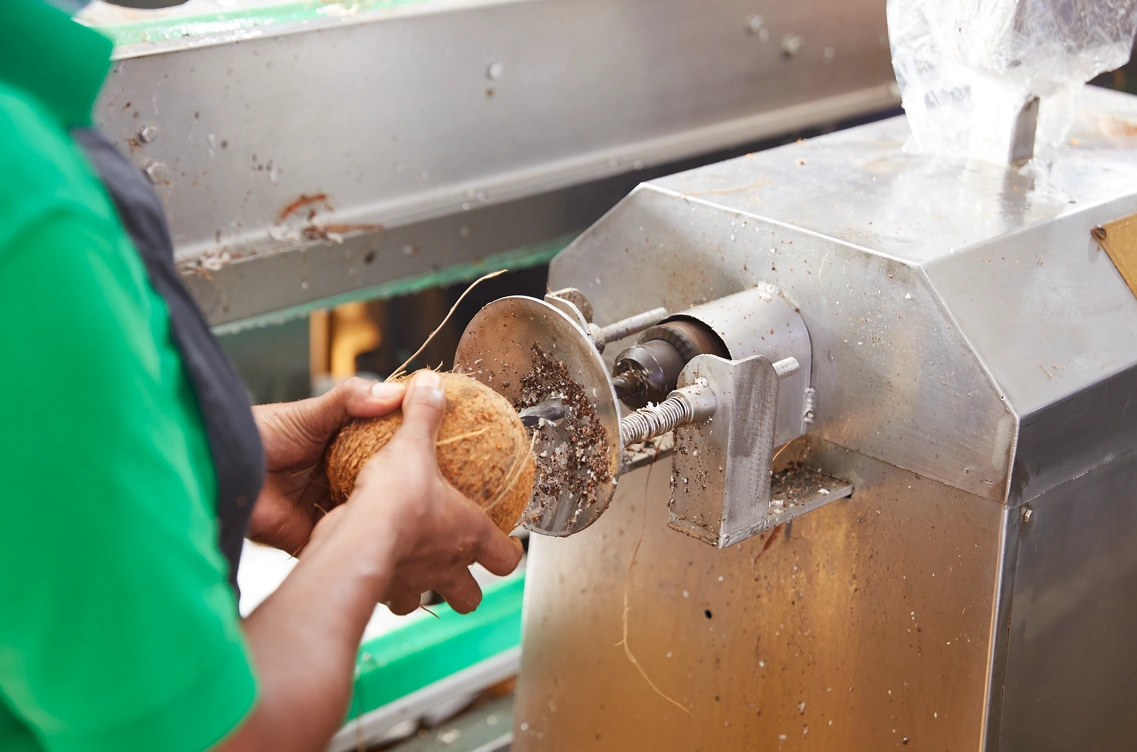
Raw Material Control
Every raw material consignment is tested against a defined specification before it enters production. Coconuts failing to meet parameters are rejected at intake — not identified during finished product testing.
What we test at intake
Moisture content · fat content · FFA (free fatty acid) level · microbial load · pesticide residue screening · heavy metal screening · sensory evaluation (colour, odour, taste).
TPC · E.coli · Salmonella · Listeria · Yeast & Mould
FFA · Moisture · Fat · Peroxide value · Pesticide residue
Colour · Odour · Taste · Appearance — trained panel
Rejected at intake if failing
Pesticide residue screened
Heavy metal screening
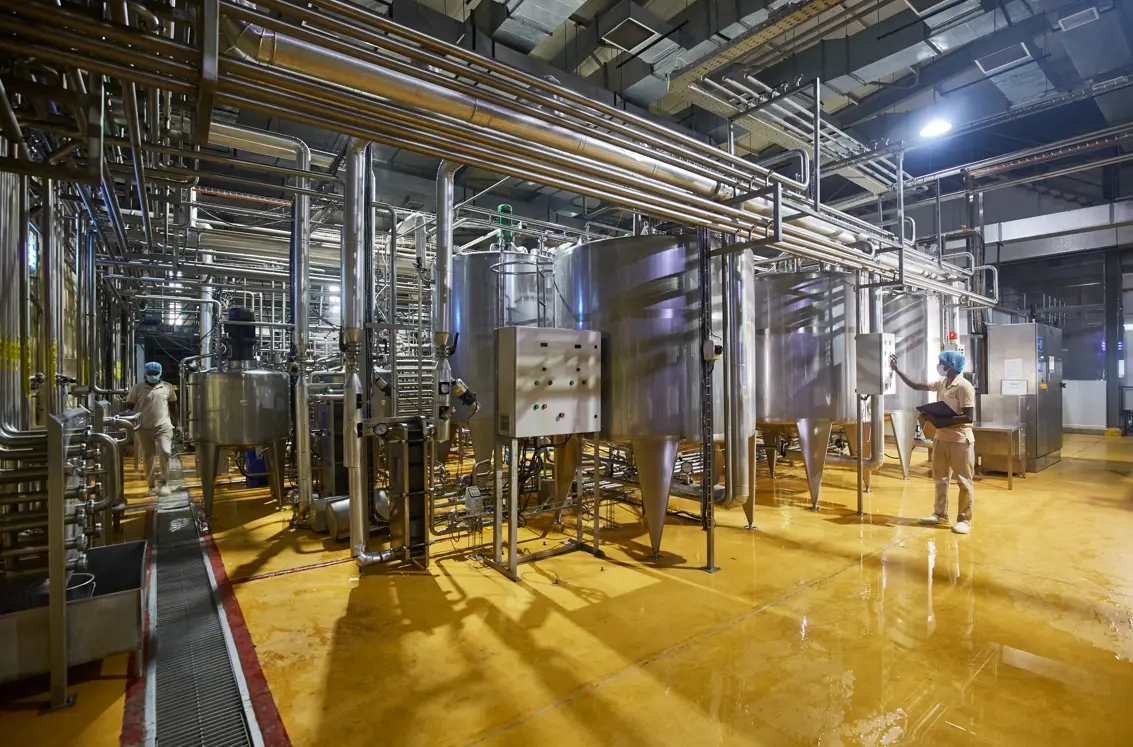
In-Process Control
Critical Control Points (CCPs) are monitored continuously during production. Temperature, pH, Brix, and microbial parameters are checked at defined frequencies — with corrective action protocols for any deviation.
Critical control points covered
Pasteurisation temperature & time · Brix / concentration · pH · metal detection · fill weight · seal integrity · visual inspection. All CCPs logged in real time and retained for traceability.
Pasteurisation temp · time · kill-step validation
Fill weight · Brix · pH · moisture · seal integrity
Metal detection (Fe / NonFe / SS) · X-ray on request
Real-time CCP logging
Corrective action protocol
Metal detection every batch
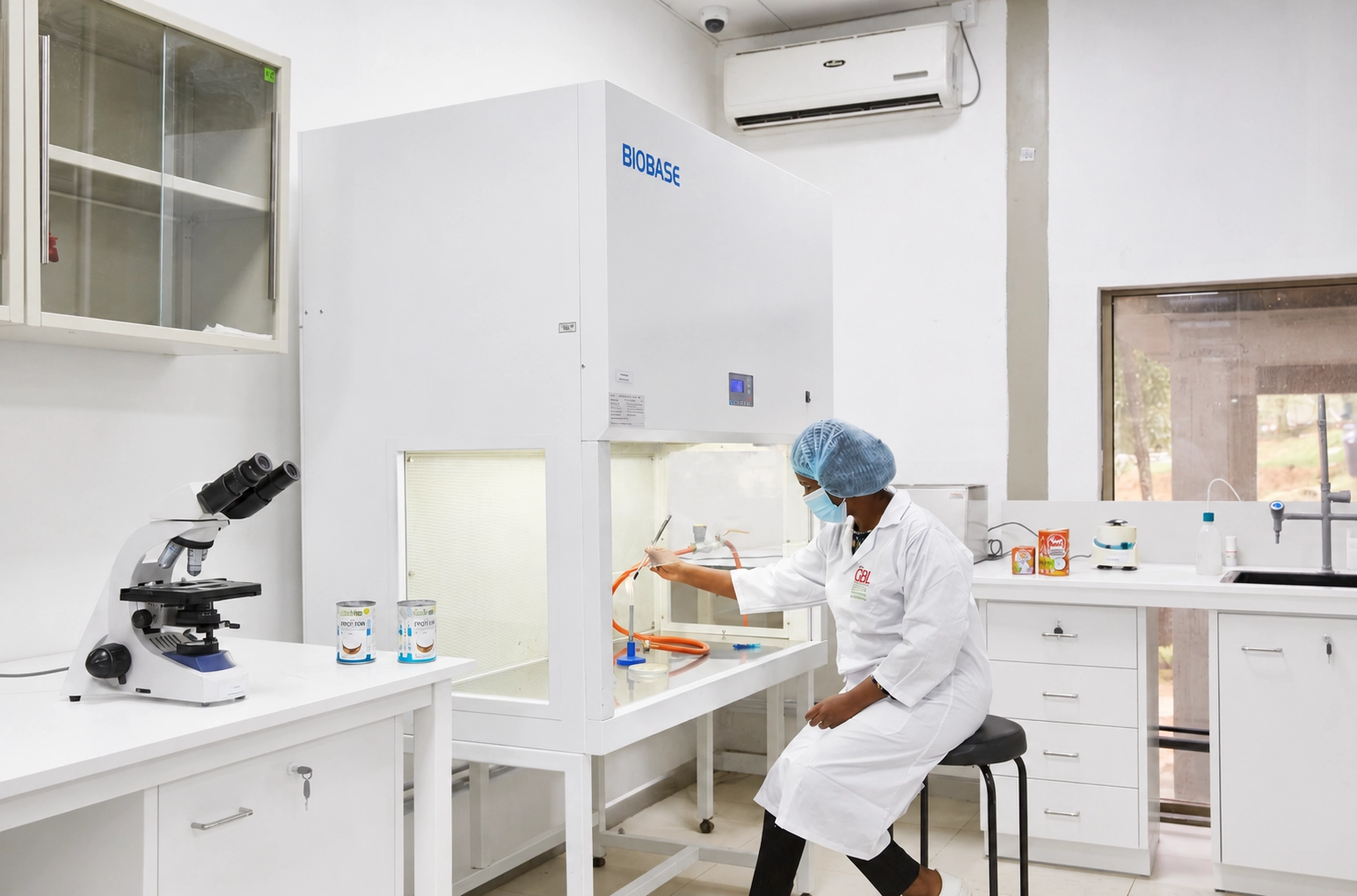
Finished Product & COA
Every production batch is held pending release test results. A full Certificate of Analysis (COA) is generated per batch before despatch — and shared with buyers as standard with every shipment.
COA covers as standard
Product name · batch code · production date · best before · moisture · fat · protein · carbohydrates · microbiological results (TPC, E.coli, Salmonella, Listeria, Yeast & Mould) · heavy metal results · pesticide residue results · sensory results · release status.
Issued per batch · per shipment · includes all parameters
Allergen · heavy metals · full pesticide panel on request
Accredited external labs used for confirmation & compliance
COA every batch
Held until release pass
Retained 5 years
Buyer-specific specs accepted
04 — Traceability Documents
Every CBL shipment is accompanied by a standardised documentation package. Below are the documents issued as standard — additional documentation available on request.
Certificate of Origin
Issued per shipment — declares country of origin at product level. Sri Lanka or Indonesia stated unambiguously. Never blended origins.
Per Shipment
Phytosanitary Certificate
Issued per shipment — declares country of origin at product level. Sri Lanka or Indonesia stated unambiguously. Never blended origins.
Regulatory
Health Certificate
Issued by the Sri Lanka Export Development Board. Certifies the product is fit for human consumption and meets the food safety requirements of the destination market.
Per Shipment
Organic Transaction Certificate
Issued by the certifying body per organic shipment. Proves the product has been produced, processed, and traded under certified organic conditions. Required in EU (TRACES), US (NOP), and Japan (JAS).
Organic Only
Certificate of Analysis (COA)
Issued per production batch. Full microbiological, chemical, and physical results. Buyer-specific specification formats accepted.
Per Batch
Fairtrade Documentation Pack
Per shipment — includes Fairtrade transaction documentation, premium records, and FLOCERT audit certificate. Full ESG pack (SMETA / BSCI / Amfori) available upon request.
Fairtrade Only
Internal Control System
Every farm. Every harvest. Every batch. One connected system.
Farm registration & mapping
Every contracted farm is registered, GPS-mapped, and allocated a unique farm ID. Farm-level records are maintained continuously — not assembled at audit time.
Harvest tracking
Each harvest is logged against the farm ID, harvest date, and collector. Coconuts are traceable back to the individual farm from the finished product batch code.
Processing batch linkage
Raw material intake is linked to the processing batch code. The ICS connects the farm harvest record to the finished product COA — end to end.
Annual ICS audit
The entire ICS is independently audited each year as part of the organic and Fairtrade certification renewal process. Farm-level records are inspected in full.
Farms registered in ICS — GPS mapped, individually audited
Batch traceability — farm-level to finished product
Record retention — full batch records held for 5 years
Unresolved traceability gaps in last independent audit
— CBL Natural Foods · Quality & Compliance Statement —