Grown whole.
Wasted never.
The coconut palm gives for sixty years — and we return the favour. Every husk, every shell, every drop of water accounted for, from the farmer's gate to the world's shelf.
Demeter Biodynamic
Naturland Organic
Fairtrade International
USDA Organic
EU Organic
BRC Grade AA++
Halal & Kosher
17 Total Certifications
Purity, pictured
One ingredient. Nothing to hide.
An editorial study in clarity — because that's what we ship. Single-ingredient coconut water and food-grade coconut, no concentrate, no additives, nothing between the nut and the label.
Art direction · A study in purity
Clear enough to pour.
How we hold ourselves to it
Sustainability at CecilBio isn't a department — it's the operating model. Progress against every commitment we make is reviewed inside our annual Demeter and Fairtrade audits, published to buyers on request, and walked in person on supply-chain visits we host for any customer who wants to see the grove behind the label.
Demeter Biodynamic
Naturland
Fairtrade
EU Organic
USDA
BRC AA++
01 — For Farmers
The first hands
the coconut ever knows.
Over 3,000 farmers grow inside our vertically integrated agriculture network — with guaranteed prices and stable demand they can plan a family around. Our agriculture teams work alongside them to mechanise and digitise processes and embed better practices, supporting better livelihoods across our farmer communities.
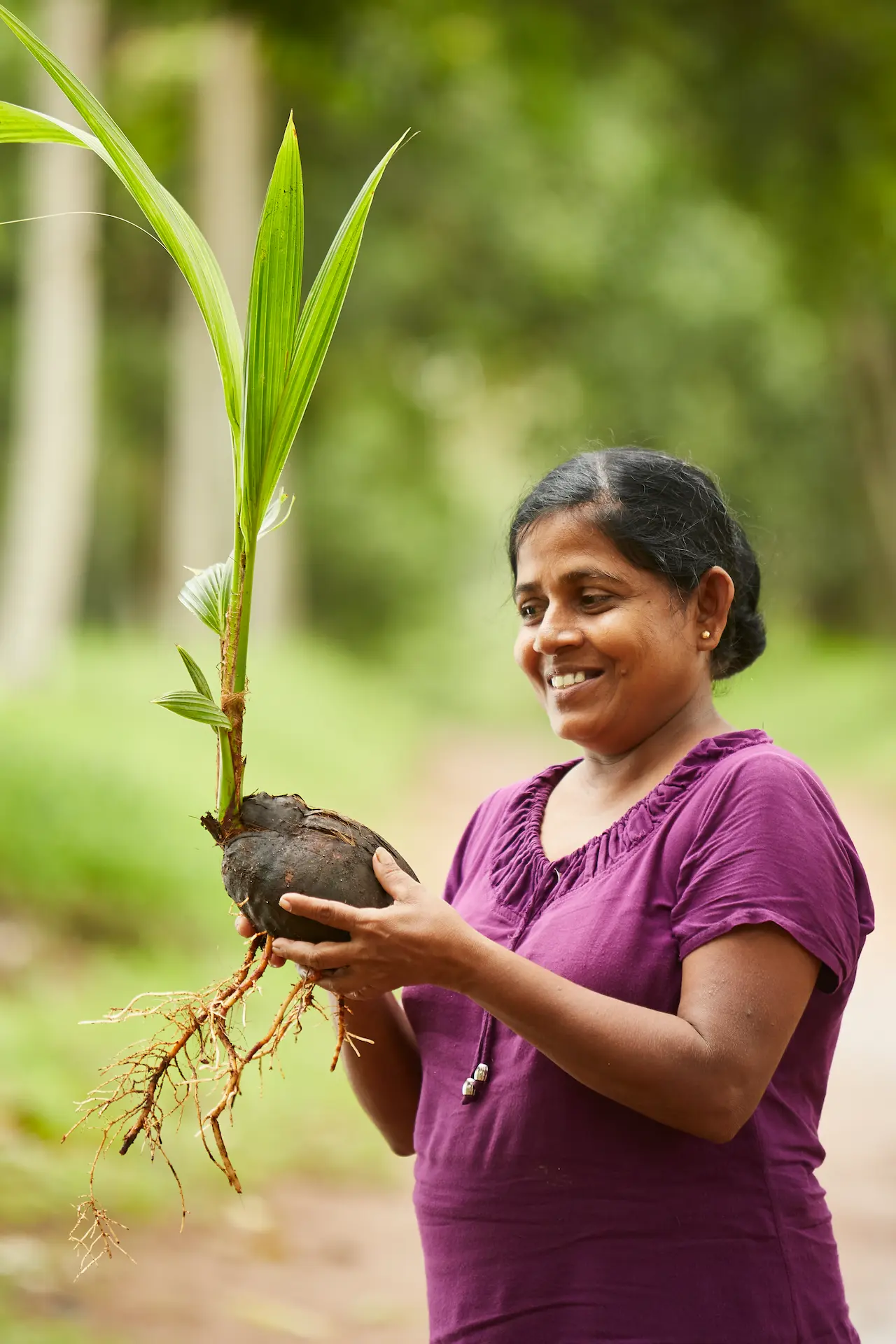
one contract.
Caring for our farmer communities
A community with
its own name.
CBL is connected to a network of over 2,500 Organic & Fair Trade farmers, organised under one grower society. The relationship runs deeper than procurement — guaranteed prices, shared agronomy, and a Fairtrade premium the community directs itself.
Our Organic & Fair Trade grower society
"Seemasahitha Wagakaruwange Sangamaya"
A registered society of cultivators — the farmer group at the heart of our Organic & Fair Trade supply chain in Sri Lanka's coconut triangle.
Ethics of the harvest
No shortcuts.
No sentient being harmed.
How a coconut comes down matters as much as where it goes. Four standards we hold across every grove in the network.
No Animal Abuse
CBL ensures no animal abuse anywhere in its supply chain — a hard line, aligned with our commitment to ethical farming and animal rights.
Human Harvesting
Every coconut is harvested by people, using traditional methods — long bamboo poles and hand tools — chosen for safety and efficiency alike.
Fair Wages
Workers receive fair wages as mandated by the Government — and our Fair Trade farmer groups receive further assistance through the FT premium contributed by our valued consumers.
Wildlife Impact
Toque Monkeys and Giant Squirrels take their share of the crop — and that's where it ends. No sentient beings are harmed on Sri Lankan coconut farms, thanks to ethical concern and animal welfare standards.
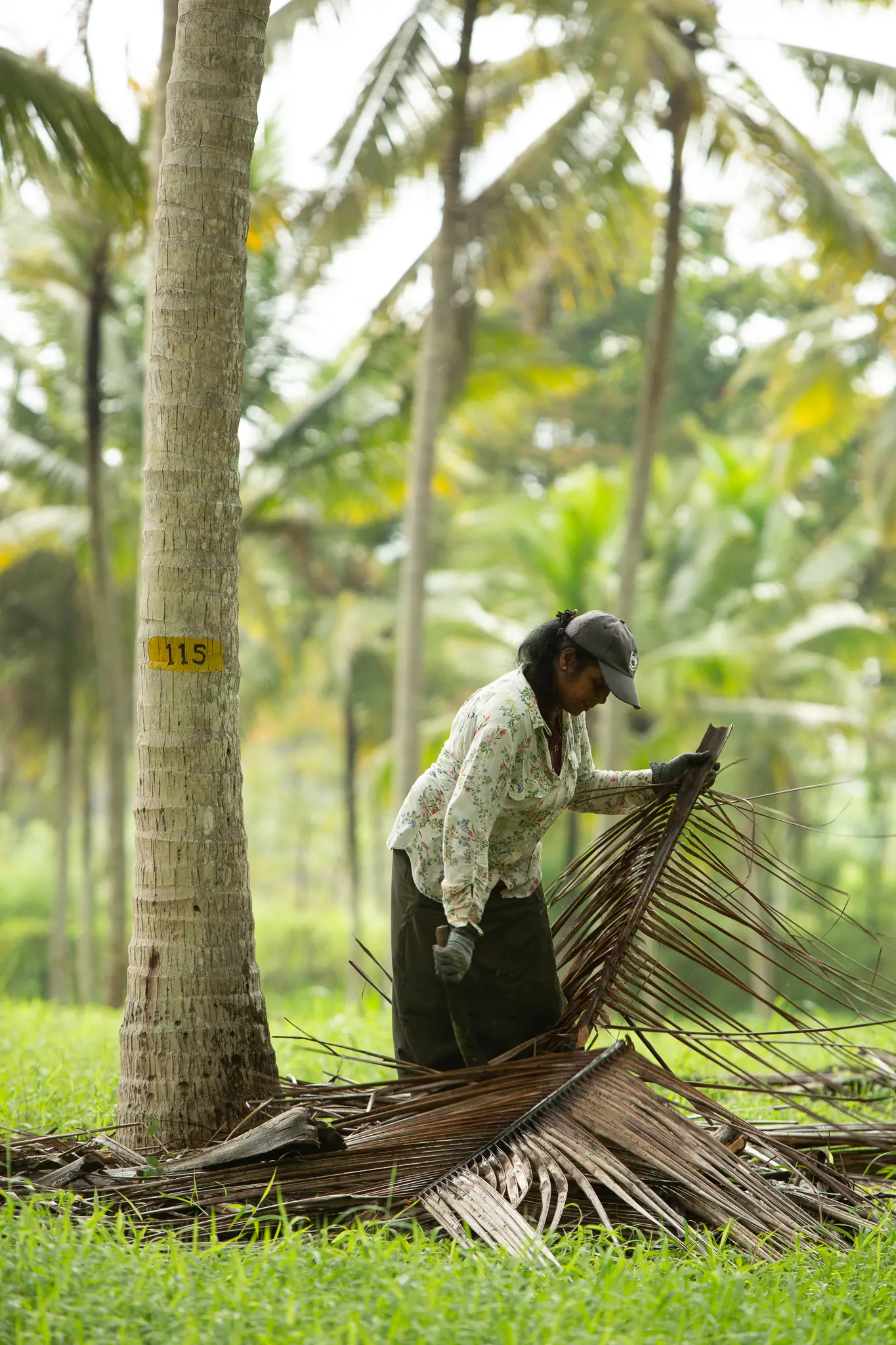
what you feed it.
02 — For Soil
Everything the palm drops,
the ground gets back.
Biodynamic isn't a certificate on a wall — it's what the soil looks like after thirty years of husk mulch, coir compost and cover crops instead of synthetic anything. Under Demeter rules, the estate is treated as a single living organism.
The whole coconut
One nut. Four lives.
Scroll through the anatomy of zero waste.
mulch for the grove.
The outer husk becomes coir — geotextiles that hold hillsides together, peat-free growing media that spares Europe's bogs, and mulch that goes straight back under the palm it came from.
nothing burns for nothing.
Shells fuel our own biomass boilers in place of fossil fuel, and the char becomes activated carbon — the same material that filters drinking water in cities we export to.
the world knows us by.
Milk, cream, desiccated, virgin coconut oil, flour — cold-pressed and clean-label. Even the press residue is milled into high-fibre coconut flour, so the kernel leaves nothing behind.
now bottled first.
Coconut water was once processing runoff. Today it's captured at the moment of opening, filtered and packed — a product line built entirely from what used to go down the drain.
03 — For Planet
A crop that stands for sixty years.
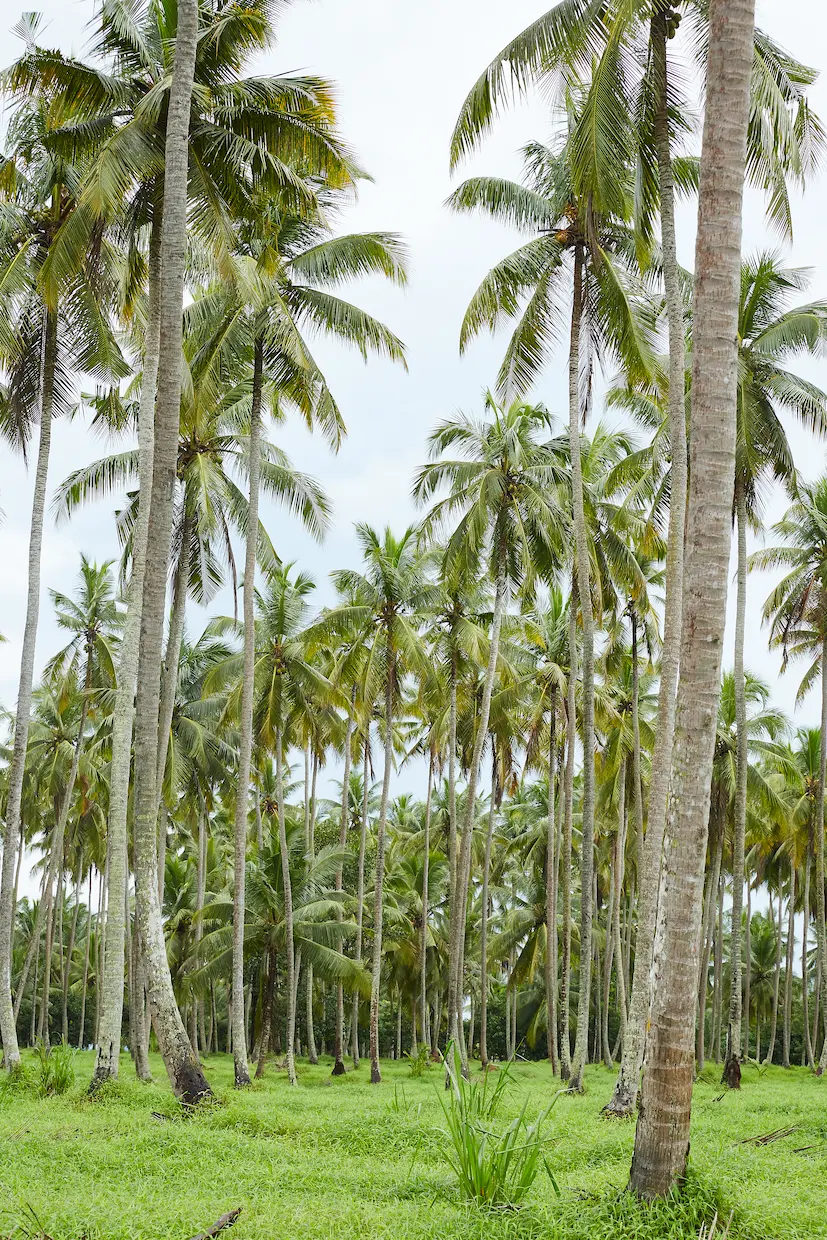
A coconut palm is not a field you clear — it's a canopy you keep. Our groves are permanent tree cover that sequesters carbon for decades, shelters birdlife, and never asks for a forest to fall.
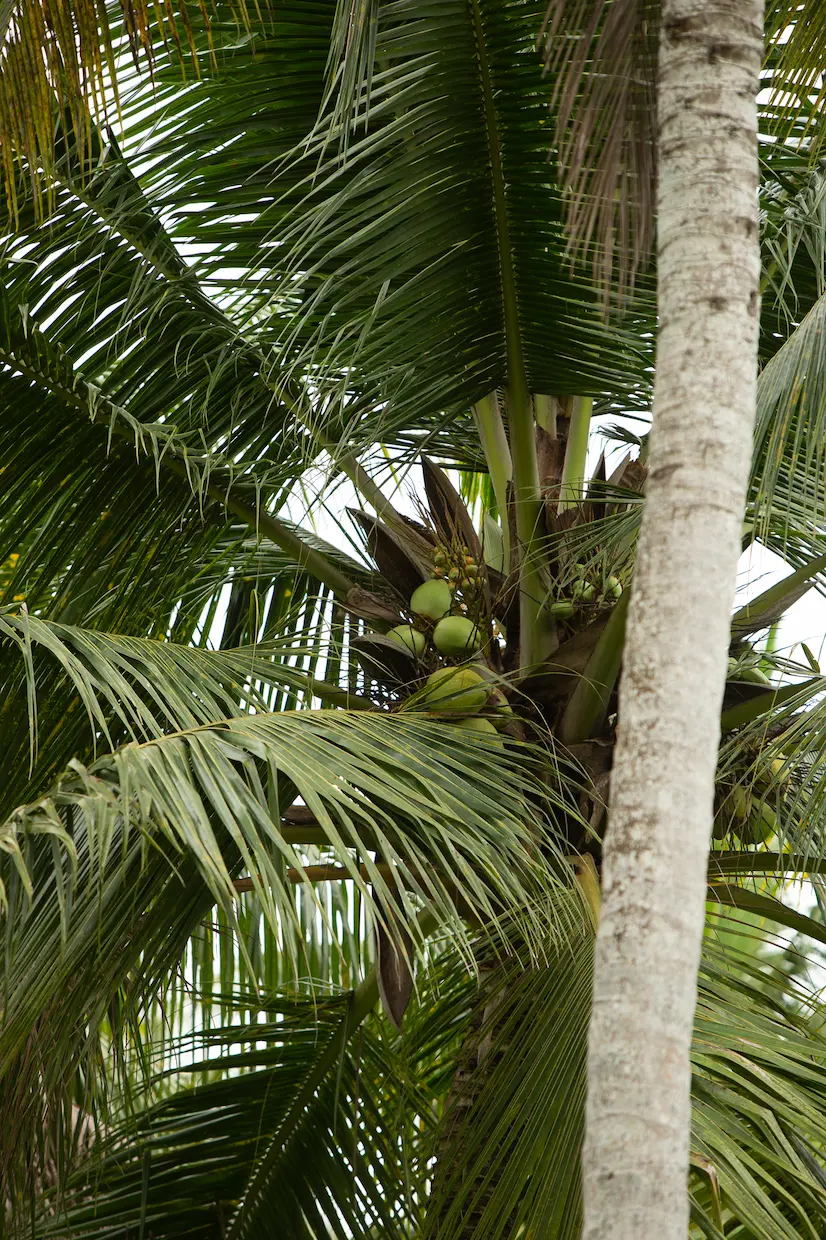
counted palm by palm.
the grove keeps.
04 — For Water
Rain-fed by nature,
returned cleaner than taken.
Sri Lanka's coconut triangle runs on monsoon, not irrigation — one of the lightest water footprints of any tropical crop. Where our processing does draw water, it leaves through treatment ponds, not into a river.
Our commitments to sustainable growth
Growth that the grove
can keep up with.
Supporting sustainable organic coconut and fruit cultivation through biodynamic agriculture — distributing essential inputs to growers so certified practice never stalls at the cost of a seedling or a soil amendment.
In-house agromet services — launched by our own teams — put weather intelligence in farmers' hands, helping them reduce crop damage and build resilience against a shifting climate.
Environmental, social and governance platforms are integrated into our planning — reducing risk and empowering informed decision-making across all operations, not just the ones with "sustainability" in the title.
The impact ledger
Measured, not claimed.
Every figure below sits inside a certification audit — Demeter, Naturland, Fairtrade, BRC — verified on the ground, not in a brochure.
Value of agricultural produce purchased from farmers
2023/2024
2023/2024
Total trees planted
2023/2024
2023/2024
CO₂ emissions eliminated annually through renewable energy
Annually
Annually
Total specific energy consumption
2023/2024
2023/2024
Volume of agricultural raw material purchased
2023/2024
2023/2024
Sustainability you can put on a label.
Everything on this page ships inside a product. Build a certified range with our private label coconut programme, source Fairtrade coconut at volume through bulk & wholesale supply, or start with the Tetra coconut milk & cream range — all grown under the standards above.
Walk the grove
behind the label.
Audit summary PDF — certifications, farmer ledger, waste & water data
Supply-chain visits hosted for buyers and partners
Reply within two business days, documents included
Also From CBL
Every claim on this page has its own page.
See it yourself
Visit us
Walk the Demeter groves, watch a monkey-free harvest and meet the farming families behind every carton — buyer visits hosted year-round in Sri Lanka.
Follow the coconut
Sourcing & supply chain
From 3,000+ contracted smallholders to export dock — every step of our coconut supply chain, mapped, traceable and broker-free.
Proof on paper
Certifications
Demeter Biodynamic, Naturland, Fairtrade and BRC — scopes, audit dates and certificates for the standards this page is measured against.